
Rwenzori Mountain National Park
Rwenzori Mountain National Park is located in Uganda, along the border of Uganda and the Democratic Republic of Congo; This area is famous for being a unique location for high-altitude trekking. The park is a UNESCO World Heritage Site for its natural beauty and importance to ecology.
The combination of equatorial ice caps, tropical rainforests, and very rare endemic plants and animals makes this mountain range very different from any other mountain range in Africa; Thus the park provides visitors with the opportunity to experience all the different climate zones together while at the same time providing breathtaking views of the landscapes and experiencing the beauty of nature’s resiliency.
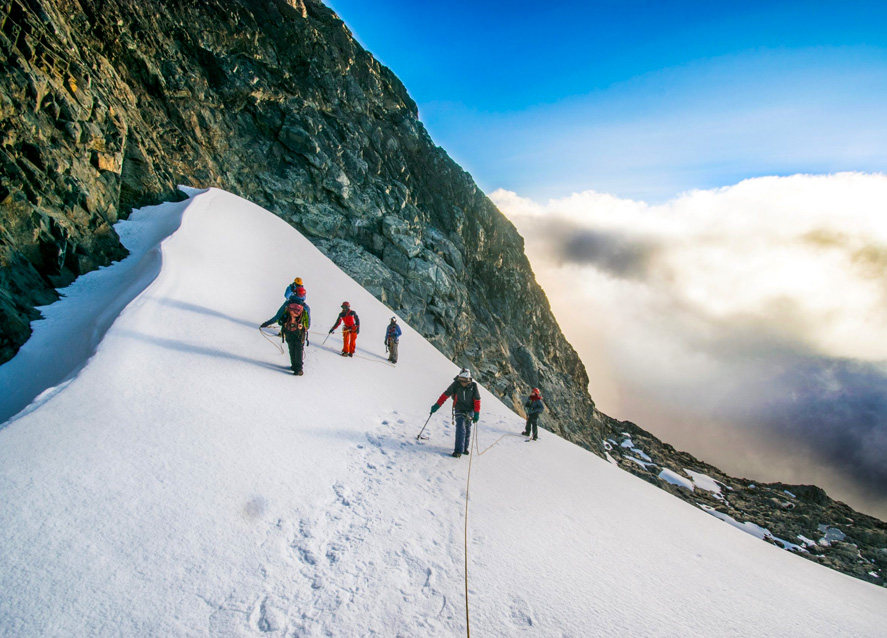
Permanent Snow/Ice Formed Along Equator’s Axis (Equatorial Mountains).
The biggest difference between the Rwenzoris and other places, such as Kilimanjaro, is that the Rwenzoris possess glaciers and permanent snow located almost directly on the equator. Many of the most famous equatorial mountains (Kilimanjaro) exist because they are isolated volcanic mountains; however, the Rwenzoris are a non-volcanic, elevated block of ancient rock that was uplifted. As a result of this unique geological history, the Rwenzoris have jagged, dramatic peaks (such as Margherita Peak), which are constantly covered by mist or moisture.
Contrasting against the lush greenery from the surrounding tropical forest, the bright white snow is a striking contradiction and a captivating sight. The snowy highlands provide many rivers and alpine lakes. Hence, the highlands are an important water supply for the area, lending credibility to the many ancient legends that refer to the highlands as the “Mountains of the Moon.”
A Journey through Ethereal Jungles and Giant Flora.
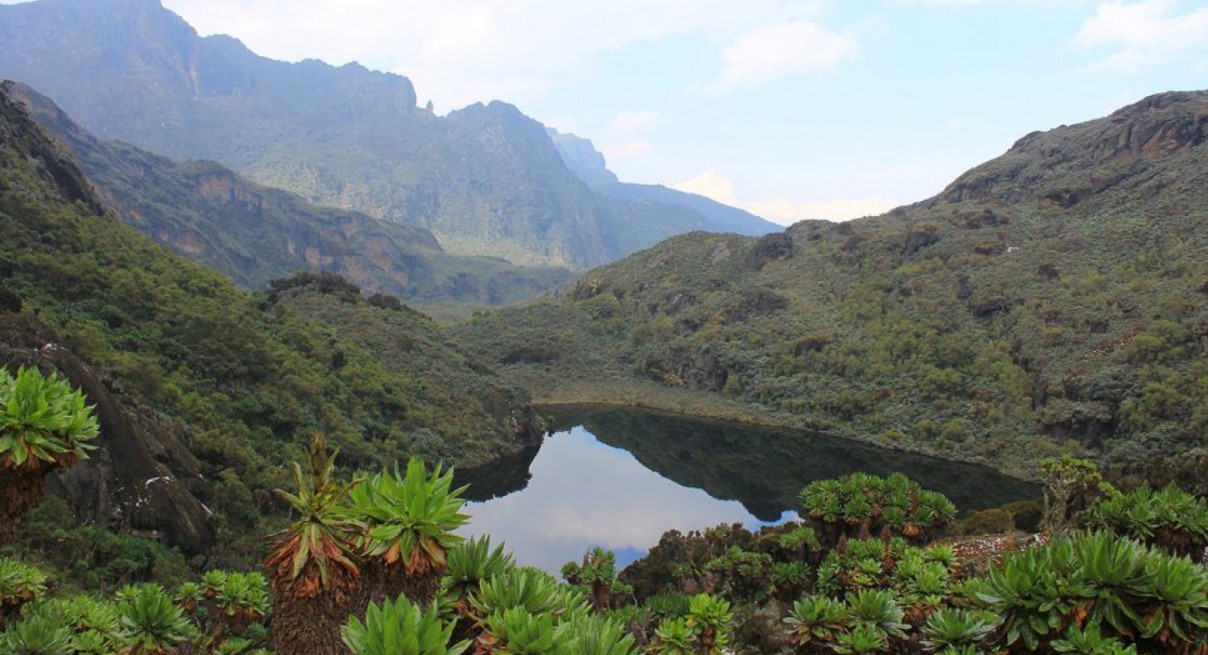
The Rwenzoris are like walking through various surreal gardens. The journey begins in dense rainforests and bamboo zones, followed by a transition into the exclusive Afro-Alpine moorlands, which is where the true biological wonder of the park is realized. Due to the high altitude, cool temperatures, and continuous rainfall in the park, the park has produced an impressive array of endemic plants that cannot be found anywhere else in the world. The impressive size of the endemic plants has created a wonderful, moist, and mossy environment dominated by bizarre species of tall and enormous plants, including giant lobelias and giant groundsels.
The giant groundsels look like giant desert succulents but grow in an always-wet environment. Their growth may be compared to the image of prehistoric sentinels; you can’t help but think of them as sentinels of stone. A combination of dense, shaggy mosses covering every surface of the trees and the frequent presence of mist creates a unique and incredibly ethereal jungle.
Haven for rare and endemic species.
Rwenzori National Park is not just a beautiful park; it is also a biodiversity hotspot. Due to the long period of isolation and the variety of climate zones, this area is home to many species of plants and animals that only exist here. This protected area has over 70 mammal species and more than 217 bird species.
The upper areas of the park provide visitors with great opportunities to view specialized, rare wildlife. Visitors can find endemic mammals such as the Rwenzori Duiker and the unique Crested Servaline Genet. Birders will find the Rwenzoris to be an important and sought-after site within the Albertine Rift Endemic (ARE) zone of the rift, hosting birds such as the magnificent Rwenzori Turaco and the gorgeous Handsome Francolin.
The area is also home to many reptiles that have adapted to these unique conditions, including the highly sought-after Rwenzori Three-Horned Chameleon. The preservation of the fragile mountain environment designates this park as one of the world’s most significant and valuable conservation areas; thus, those interested in the world’s most specialized ecosystems should plan to visit this treasure.