
Best Spots to witness the Great Wildebeest Migration in 2026.
Best Spots to witness the Great Wildebeest Migration , the Great Wildebeest Migration is often described as “the greatest show on earth.” It is a continuous, circular journey of over 1.5 million wildebeest, 250,000 zebras, and then thousands of gazelles as they move through the Serenegti national park in Tanzania and the Masai Mara National Reserve in Kenya.
Because this is a natural event driven by rainfall, the animals are always on the move. To see the migration in 2026, you must be in the right place at the right time. Here are the best spots to catch the action through the year.
1. Southern Serengeti (Ndutu Region): The calving season.
Best time: January to March 2026.
If you want to see the migration at its most vulnerable and heartwarming, the Ndutu region in the southern Serengeti is the place to be during the first quarter of the year. This is the calving season.
Why it’s a top spot: During these months, the herds settle on the short grass plains to give birth. It is estimated that 8000 wildebeest calves are born every single day during the peak of February. The grass here is rich in nutrients, which helps the mothers produce milk. However, this abundance of young life attracts Africa’s top predators. You will see high concentrations of lions, cheetahs and hyenas looking for an easy meal. It is a dramatic time of life and death, and hyenas are looking for an easy meal. It is a dramatic time of life and then death, set against a beautiful backdrop of blooming wildflowers.
2. The western corridor: The Grumeti River crossing.
Best time: May to June 2026.
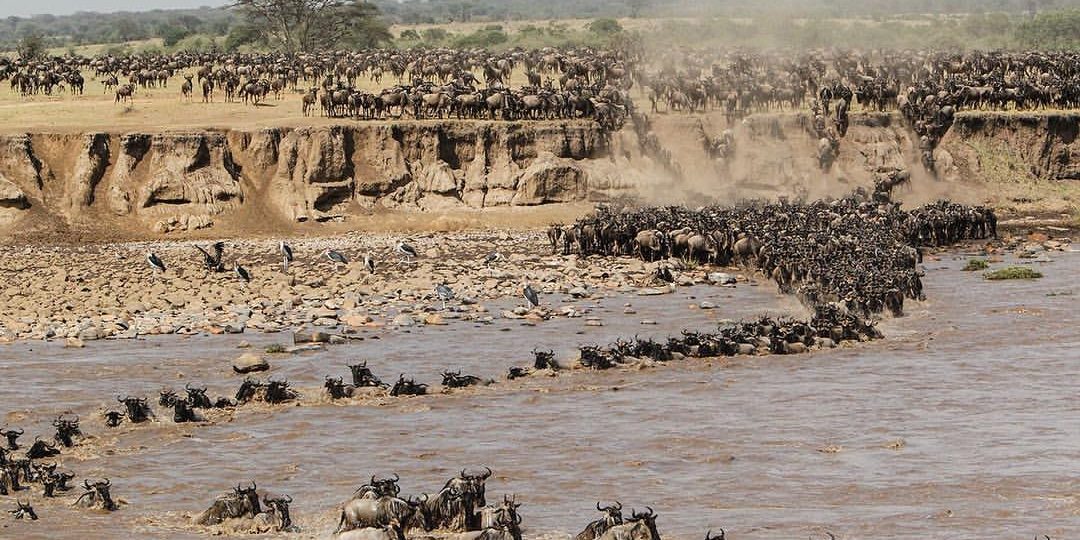
As the southern plains dry out, the herds begin moving north and west toward the “Western Corridor” of the Serengeti. This is a narrower strip of the land where the animals congregate, facing their first major water obstacle: the Grumeti River.
Why it’s a top spot: While the Grumeti crossings are not as famous as the Mara River crossings, they are equally spectacular and often much less crowded with tourists. The river is a home to the massive Nile crocodiles that wait for the herds to splash across. Staying in the western corridor during June offers a more exclusive experience, as there are fewer lodges in its area, allowing you to witness the size of the columns of wildebeest stretching for miles across the savanna.
3. Northern Serengeti (Kogatende): the dramatic Mara River Crossings.
Best time: July to September.
This is the most famous phase of the migration. The herds reach the northern edge of the Serengeti and then prepare to cross the Mara River into Kenya’s Masai Mara National Reserve.
Why it’s a top spot: the Kogatende region is the ‘’front row seat’’ for the river crossings. The wildebeest gather in their thousands on the riverbanks, sometimes waiting for days before a single brave individual leaps into the water, triggering a chaotic stampede. You will see animals battling rushing currents and dodging crocodiles. It is an intense, heart-pounding experience. In 2026, this area will remain the most sought-after location for the photographers and wildlife documentary filmmakers.
4. The Masai Mara National Reserve, Kenya: the great arrival.
Best time: August to October 2026.
Once the herds have successfully crossed the Mara River, they spread out across the rolling plains of the Masai Mara in Kenya.
Why it’s a top spot: Masai Mara is smaller than the Serengeti, which means the density of the animals is incredibly high. During these months, the Mara is literally “black” with wildebeest. Because the grass is kept short by the grazing herds, it is the best time for spotting big cats like leopards and cheetahs, who are constantly on the hunt. The mara also offers ‘’Private Conservancies’’ where you can enjoy off-road driving and then night safaris to see the migration from a more private and luxurious perspective.
5. Central Serengeti (Seronera Valley): the year-round hub.
Best time: April to May and then November to December 2026.
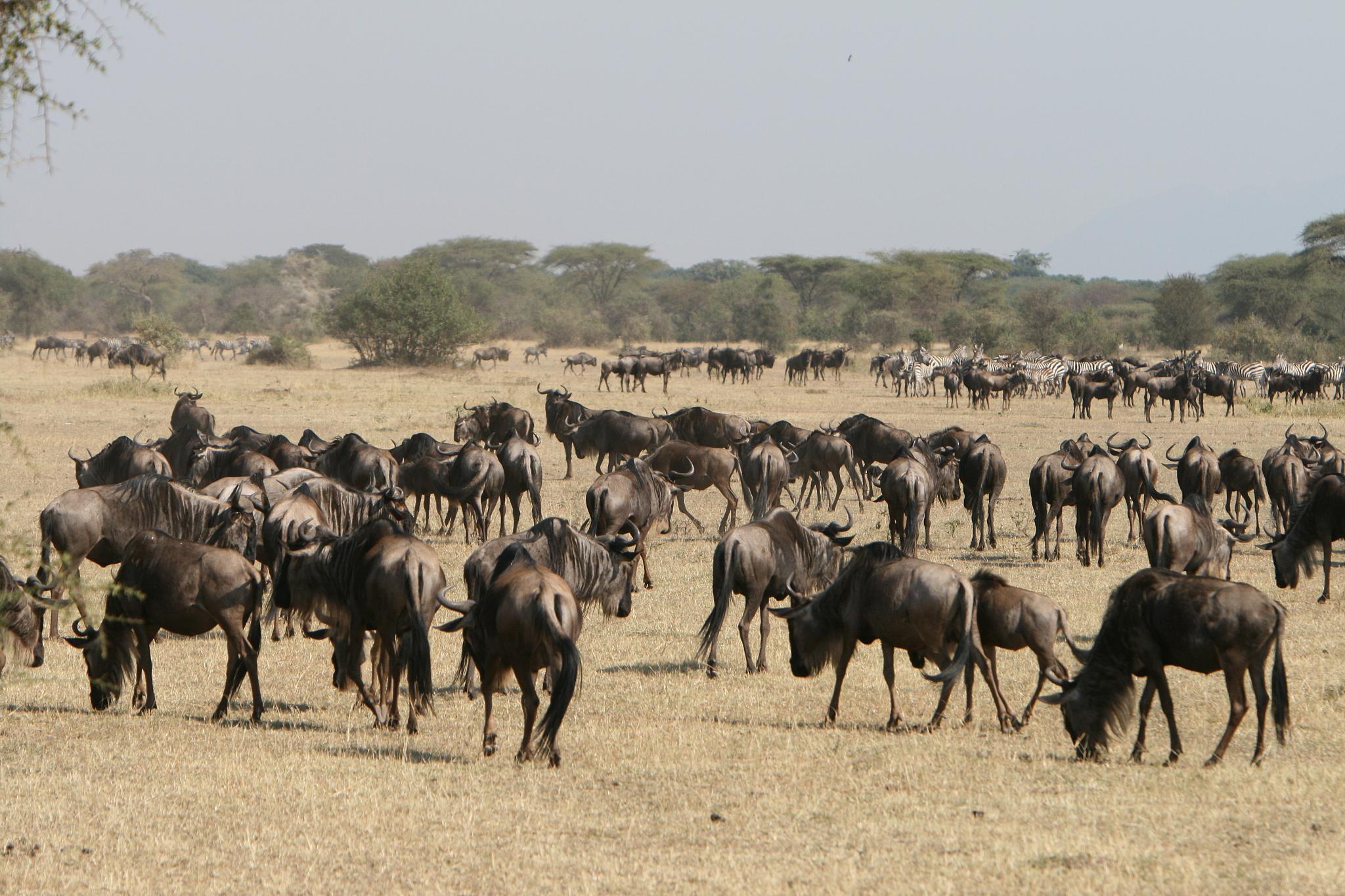
Seronera Valley in the central Serengeti is the “transit hub” of the migration. The herds pass through here twice a year, once as they head north and once as they return south toward the calving grounds.
Why it’s a top spot: While the herds might not stay here as long as they do in the north and south, seronera is famous for its permanent resident wildlife. Even if the main migration has just passed through, the valley is full of “resident” wildebeest and the highest concentration of leopards in Africa. In late 2026 (November/December) you can catch the ‘’short rains’’ migration, where the herds move rapidly back toward the south, providing a great opportunity to see the migration without the peak season crowds.
In conclusion, no matter which spot you choose, witnessing the Great Migration in 2026 will be a reminder of the incredible endurance of nature. Just remember to book your lodges early, as these ‘’best spots’’ fill up very quickly.