
Rwenzori Expedition Stories
The Rwenzori Mountains, otherwise called “Mountains of the Moon,” rise majestically in central East Africa. The climbing experience here is altogether different from what is found anywhere else in Africa. The dry landscape of Kilimanjaro is a world away from a region filled with ice, mud and truly bizarre, gigantic vegetation.

The journey up to the summit of the Rwenzori Mountains, most notably the glacier-crowned Mount Stanley (or Margherita Peak), will challenge even the most seasoned mountaineer in terms of endurance. Below are excerpts from climbers who were able to traverse this vertical rain forest landscape in its entirety.
Shock and Awe: Entering the Bog and Mud Forest.
Most climbers remark about their shock at the landscape’s appearance. During the first few days of the trek, climbers find themselves in a lush Equatorial Rainforest; this becomes a surprise to many climbers. This rapidly transitions into what is known as the bog forest.
These treks are filled with hours of time spent squishing their feet through several inches to knee-deep mud. One veteran of climbing, Sarah from the United Kingdom, commented on her trek by saying, “I have read about the mud, but nothing can prepare you for it. It is not just muddy; it is an adventure.”
Realizing that my boots will be wet, I put my total focus into positioning my feet. It’s an attrition war against the ground beneath me; however, when I reach the top, it will have felt that I worked for it. The hardest part about starting out is probably the mental part of it; there are many challenges early on and it requires you to be patient and persistent.
Fighting Mother Nature and the Tree-Like Vegetation.
As you climb higher up, the rainforest gives way to a surreal ecology. You enter the Afro-Alpine zone, which is filled with strange and giant plants. People say that it feels like stepping back in time to a prehistoric world. You’ll walk through forests filled with Giant Heather Trees that are all covered in moss, past valleys that are protected by enormous candelabra-like Giant Lobelia and Giant Groundsels.
The weather will also play a large factor in the story; you can expect rain to be common, with heavy cloud cover, and cold temps to be normal. Climbers are always looking for top-notch rain pants and need to have a good attitude about getting cold and wet. Because of all the biodiversity and the feeling of solitude in such a cool place (especially when it’s foggy), the overall experience of the beauty mixes well with the physical difficulty.
Realizing the Alpine Zone: A Rocky and Icy Place.
Typically on day five of an expedition climb of the Rwenzori Mountains, you will have reached the alpine zone. Climbers experience a dramatic transition in terrain from muddy bogs to rocky moraines to permanent glaciers.
The climbers recall the feelings of accomplishment when they reach the first and highest camps and see the views of the mountains if the clouds are not obscuring their sight. For those climbing the Margherita Peak (the third highest peak in Africa), the summit day begins before dawn so that the climber can cross the glacier.
The climber will have to have special climbing equipment (crampons and ice axes). As well, the use of local guides will be important because they are experienced and can navigate their way through the crevasses of the glacier.
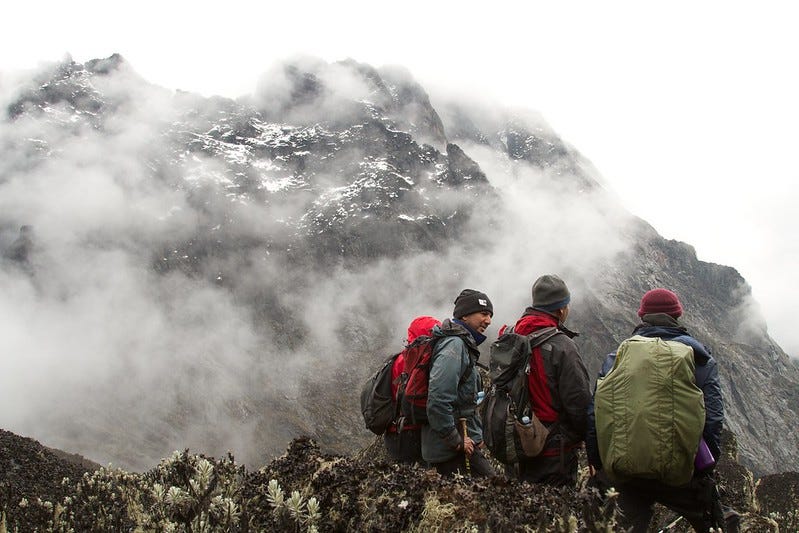
The climbers are rewarded with breathtaking, once-in-a-lifetime views of the Rwenzori Mountain Range, located on the equator. One climber described how he felt when he reached the top: “Standing on top of the snow, looking down on what seemed to be a bed of clouds, it was an incredibly humbling moment. All my struggles to get there, through mud and mist, were gone. I was alone in the silence of the snow.”
The Spirit of the Rwenzori Mountains : Rwenzori Expedition Stories
A Timeless Journey With regard to mountain series, compared to other summits, what makes the Rwenzori Mountains unique is that people will remember their journey through 5 unique climate zones rather than just being able to reach the summit.
According to true climbers, the true climbers unite with each other, they learn perseverance and teamwork, and above all, they have a great respect for this untouched water paradise. It is an authentic expedition and one that is truly hard, yet at the same time rewarding, because it tests one physically and spiritually.