
What to Consider Before planning a Great Migration Safari?
What to Consider Before planning a Great Migration Safari? People often refer to The Great Migration as “The Greatest Show on Earth” because the over 1.5 million wildebeest and hundreds of thousands of zebras and gazelles that make this amazing 800km loop in East Africa are part of the event that never stops. Nonetheless, it is not as easy as simply “going to Africa” to witness this event by planning a safari. Because the herds are always on the move, your experience will depend on your timing, your accommodation, and your readiness to plan a long time ahead.
Timing: It Is a Year-Round Cycle.
People often make the mistake of thinking that the great migration happens only during the widely publicized river crossings. The truth is that the forest animals move throughout the year.
Accordingly, you will have to choose which segment of the event you want to witness at the time of your visit. If you choose to go there from January to March, you would see the calving season in the Southern Serengeti (Ndutu). This is a scene of new life and 500,000 calves’ births, but it equally involves great predator-prey interactions where lions and cheetahs prey on the calves at their most young stage.
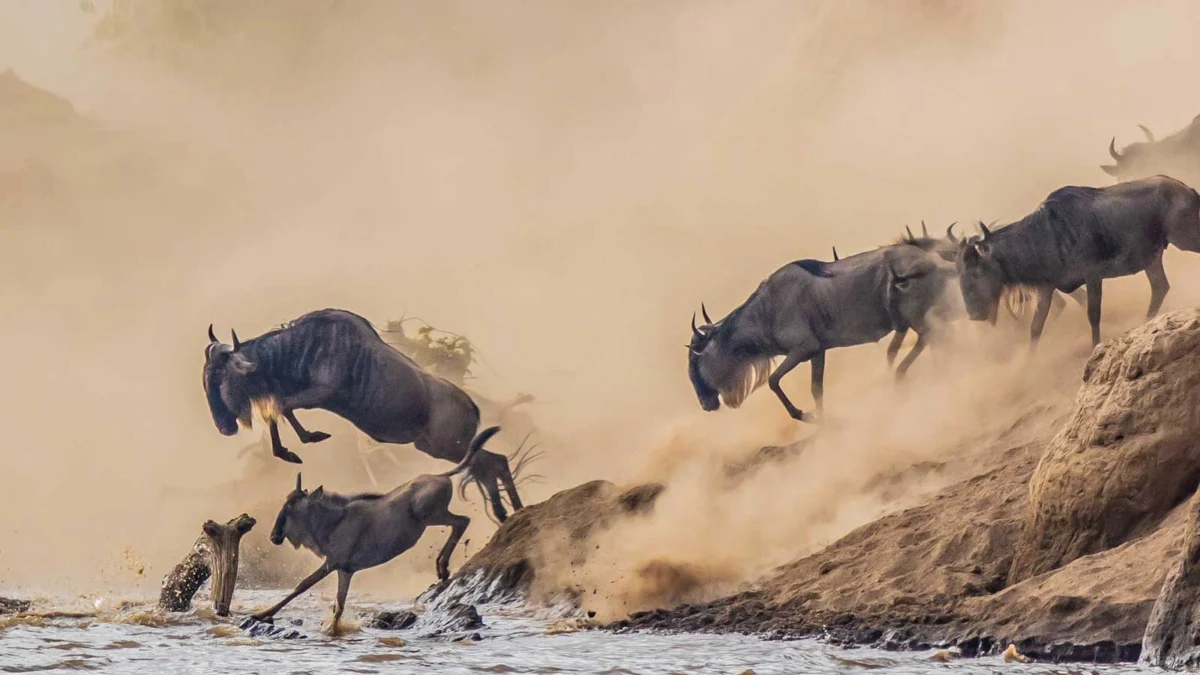
If you are dreaming of that famous wild touch that only the river crossings could give you, then you must schedule your trip around July to October. During that time, the cattle would have to contend with the crocodile-infested waters of the Grumeti and Mara Rivers. Even though it is the most famous occasion to visit the migration, it is also the most crowded. For peace lovers and less flashy persons, the “Green Season” from April to May offers both green landscapes and no crowds; however, the herds are scattered and difficult to track.
Location: Tanzania vs. Kenya.
Even though the migration is one ecosystem, it does happen at the border between Serengeti in Tanzania and the Maasai Mara in Kenya. What really matters is figuring out where the herds will be at the time of your arrival. Tanzania is home to the migration for about nine months of the year and that includes the calving season and the first river crossings, while the herds are usually in Kenya’s Maasai Mara from around August until October.
Next year, 2026, plan your trip according to the overall things you want to achieve during your holiday. Tanzania will offer you the vast, limitless wilderness plus the chance to combine the migration with a visit to Ngorongoro Crater, whereas Kenya is known for its high density of predators and the convenience of “fly-in” safaris.
Several 2026 luxury travelers prefer to do a “cross-border” safari, spending time in both countries to make sure that they won’t miss any of the moments of the action, no matter the sudden weather changes that might lead to herd movement.
Accommodation: Mobile Camps vs. Luxury Lodges.
Where you decide to spend your night is equally as important as the timing of your trip. The former is planned to follow the herds closely and is consequently moved two or three times a year to always keep you at the heart of the action.
If you want to get the most genuine, “out of Africa” feeling, these are simply unmatched. They give you a premium experience with luxurious touches (hot showers, gourmet meals) while keeping you very close to the wild side.
Permanent lodges provide more stability and greater “creature comforts,” such as swimming pools, spas, and solid walls. These are generally the answers for families or people who want to luxuriate in the comforts of home after a long day of game drives.
Although they can’t move, you could have to drive longer distances to the animals if the rain has pushed them to be away. In 2026, the best tactic is usually a “mix-and-match” one, spending a couple of nights in a mobile camp for the excitement of the migration and a couple of nights in a permanent lodge for a complete indulgence in relaxation.
Logistics: The 12-Month Rule.
The last and most practical point is availability. During the migration peak months (July to October), top-notch lodges and expert guides are typically booked 12 to 18 months in advance.
If you don’t book your trip until six months ahead, you run the risk of staying in lodges that are very far from the main crossing points and thus having to spend long hours in the safari vehicle.
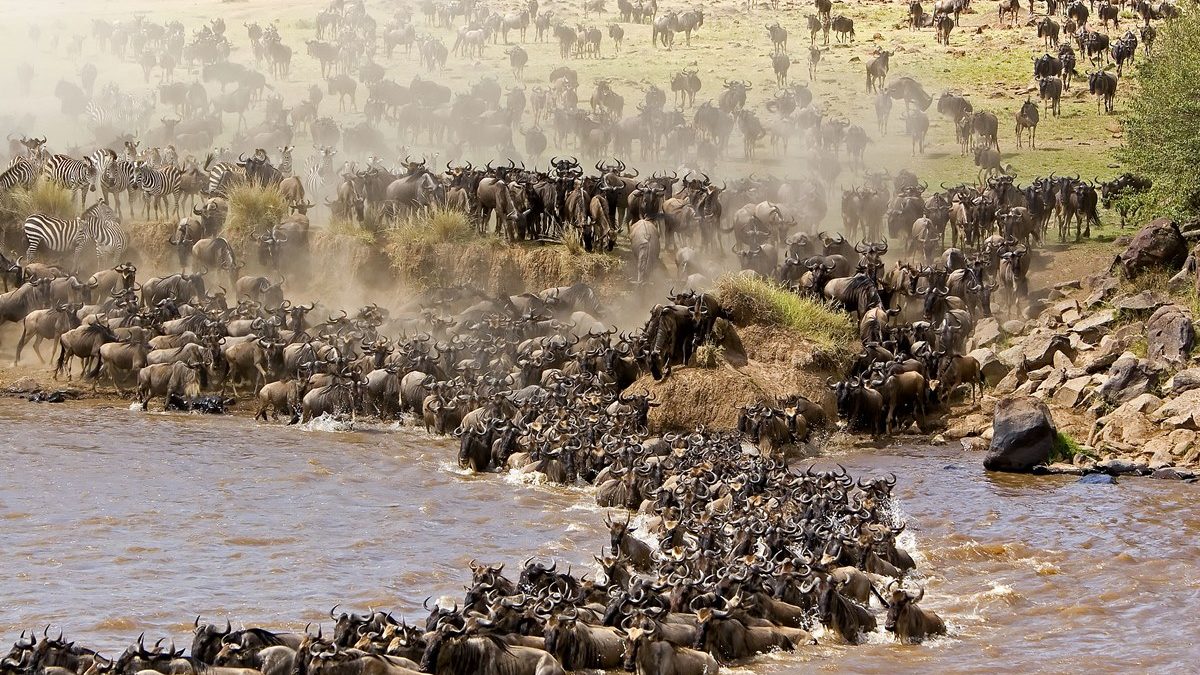
In addition to that, think about booking a private vehicle. Group tours are less costly, but the migration is a test of endurance. Waiting beside the riverbank for three hours for a crossing to happen is something that you may not be able to do in a vehicle shared with other guests who have different priorities.
Apart from that, having a private guide means you can start your days earlier or stay out later, which is usually the time when the most intense predator-prey interactions take place.
Planning a Great Migration Safari is a big investment, but with the right timing and location, it is truly life-changing with Nyumbu Beyond Journeys.