
Inside the Mystical Mountains of the Moon: Culture, glaciers, Legends and Biodiversity.
The Rwenzori Mountains are located in western Uganda on the border between Uganda and DR Congo and are often referred to as the “Mountains of the Moon.” The mountain was created by the uplift of blocks of earth from the Earth’s crust due to tectonic activity.
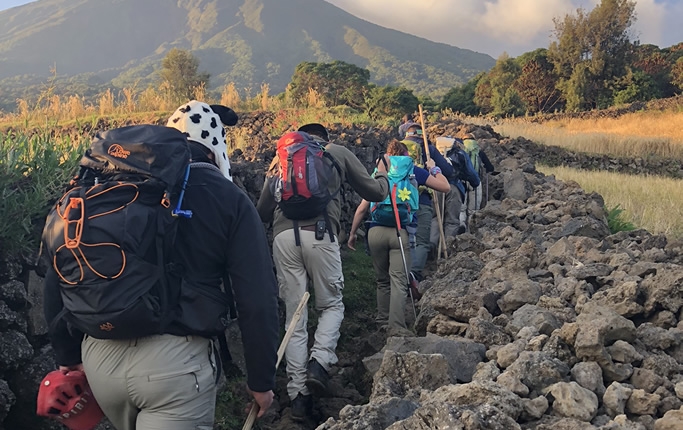
The Rwenzoris are part of a World Heritage Site recognized by UNESCO, and offer Adventure travelers something more than just a hiking experience with a challenging environment, stunning natural beauty and immense cultural significance. To explore the Rwenzoris is to traverse different ecological zones, to appreciate unique geological formations and to learn about many ancient beliefs and traditions.
The Rwenzori’s glaciers and the Nile Source—an amazing and disappearing wonder.
Of the many remarkable features of the Rwenzoris, the most striking is the equatorial glaciation seen at its snow-covered peaks. They rise to 5109 meters above sea level (Africa’s third highest mountain) with their ice, which remains year-round due to the high altitudes. To the ancient Greeks, it was believed (according to Ptolemy’s writings from about 150 AD) that this area was the source of the Nile River, hence their name “Mountains of the Moon.” The melting of these glaciers still feeds the river that forms the source of the Nile.
Climate change has made the glaciers rapidly disappear, and they are now in danger of extinction; your safari will serve as a “warning” of global changes. As a result, visitors can witness their visit as a “last opportunity to witness” the glaciers and snow-covered peaks of the Rwenzori Mountains. Climbing higher (toward the glaciers and snowfields) is extremely difficult and will challenge even the most skilled of mountaineers. The views are filled with dramatic, razor-sharp mountain rock formations that have been carved by ice and water over millions of years.
Plant Life and Biodiversity.
Africa’s Botanical Big Game. In addition to the dramatic mountain views, the Rwenzori Mountains are home to one of the highest diversities of plant life in Africa, earning them the title of “Africa’s Botanical Big Game.” There are five different and overlapping vegetation zones on the upward slope of the mountain, which provides an amazing experience for climbers. Beginning in tropical rainforests and bamboo forests (the first two zones), climbers then continue into the unique moorland and afro-alpine upper elevation zones.
It is in the upper elevation zones where climbers are able to find some of the most unusual, beautiful, and bizarre plants in Africa: giant lobelias, giant groundsels, and several large tree heathers. These large plants have adapted to the extreme daily temperature fluctuations and extreme amounts of rain and have reached an enormous size that allows them to survive in conditions that may seem uninhabitable on other planets.
In addition to having around 217 species of birds, including many species unique to the Albertine Rift, including brightly colored birds like the Rwenzori Turaco; it is also a wonderful place for bird watchers and wildlife lovers. Cultural and Mythological History of the Bakonzo.
The Rwenzori’s cultural history/Rwenzori Mountains’ culture is just as challenging as their biological composition; however, the culture is very much tied directly into the mountains’ biological and ecological environment. The mountains are considered by the Bakonzo people and the Bamba people to be their ancestral home, and both groups of people regard the mountain peaks as holy or sacred.
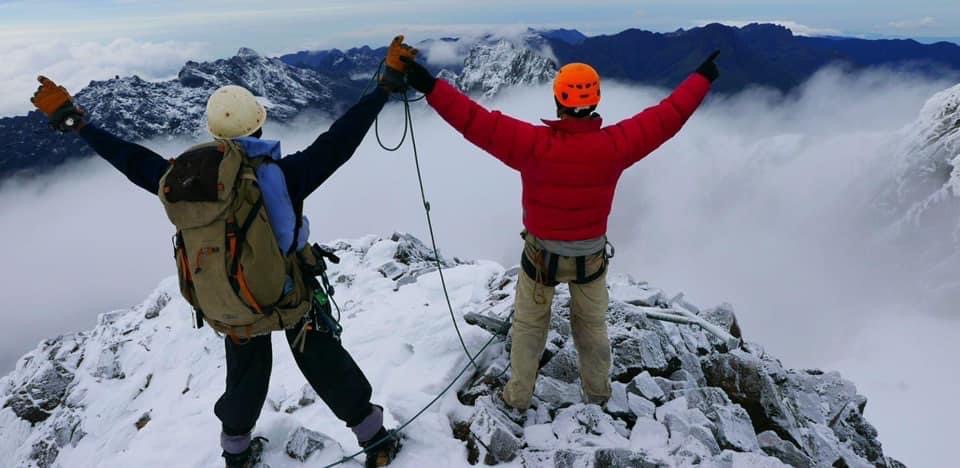
The Bakonzo people have a strong belief that their most revered deity, Kitasamba, who cannot be named in the mountain range, is found on the highest peaks of the mountains. The snow and ice (Nzuru) are viewed as the starting point to the Bakonzo people’s understanding of their existence.
Community tourism programs in the foothills allow visitors to connect with this cultural wealth. Travelers in places such as Ruboni may take guided cultural walks and meet local blacksmiths and traditional healers. These experiences will allow the traveler to have firsthand knowledge about the spiritual meaning attached to the mountains in the daily life of the locals, as well as to experience the local vibrant dance and music performances.
In addition to providing vital income for the local community, these experiences bring extra cultural depth to the trekking experience, connecting the physical journey through the landscapes to the ancient legends and folklore of the People of the “Mountains of the Moon” with Nyumbu Beyond Journeys.